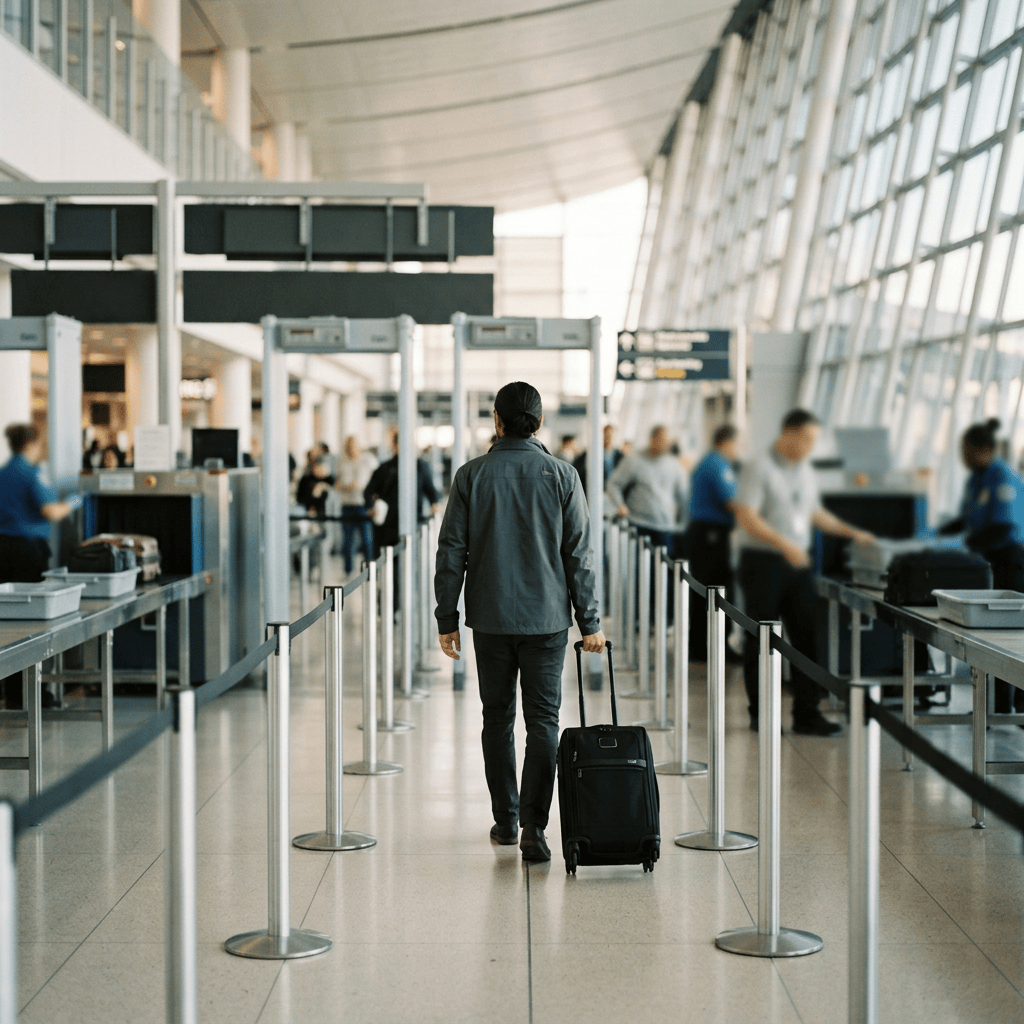
I don’t know about you, but for me, going through airport security is hands down the most stressful part of flying. I’ve traveled quite a bit over the years, and you’d think I’d be used to it by now, but nope! As someone who suffers from anxiety, there’s just something about going through TSA that gets me worked up, and before I know it, I’m breaking out in a nervous sweat.
One minute I’m happily wheeling my suitcase through the airport, thinking about grabbing a coffee and perhaps having a wander around the shops before my flight, and the next I’m standing in the security line, worrying about whether I need to take my shoes off, where I’ve put my passport, and whether I’ve accidentally packed something that’s going to set off an alarm.
And of course, there always seems to be someone behind me who has the whole process down to a fine art, while I’m fumbling around trying to get my laptop out of my bag with trembling hands. Throw in a TSA officer who’s barking instructions at everyone to hurry up, and my anxiety goes through the roof. By the time I’ve made it through security and gathered all my belongings, I feel like I need a holiday just to recover from the experience!
While I still dread airport security, I’ve picked up a few little tricks that make the experience a bit less stressful. I can’t promise they’ll completely get rid of the anxiety, but they certainly help me feel a little more organized and less likely to have a meltdown in the security line!
So whether you’re heading off on your first vacation in years, traveling with the family, or you’re just someone who gets a bit anxious when faced with long airport lines and impatient fellow passengers, here are a few things that can make getting through TSA a whole lot easier.
First Things First: Know What You’re Walking Into
One of the biggest reasons people get stressed going through TSA is simply not knowing what they’re supposed to do.
And to be fair, the rules can seem to change depending on which airport you’re flying from, what type of screening equipment they’re using, and whether you have TSA PreCheck.
You might sail through one airport without taking anything out of your bag, only to find yourself at another being asked to remove your laptop and toiletries.
The trick is to pay attention to the instructions at the checkpoint rather than automatically doing what you did on your last trip.
Some airports have newer CT scanners that let certain items stay in your bag, while others still require you to remove them. TSA PreCheck passengers also have different screening procedures.
My advice? Don’t start frantically unpacking everything the moment you reach the conveyor belt. Listen to the TSA officer, check the signs, and follow the instructions for that lane.
And if you’re unsure, just ask. It’s much better than standing there wondering whether you’ve done something wrong.
The Things TSA Is Most Likely to Take Away
Now, this is where things get interesting.
Every year, TSA officers discover an extraordinary assortment of items in people’s carry-on bags, from innocent mistakes involving toiletries to some genuinely bizarre things that make you wonder what on earth people were thinking when they packed.
TSA doesn’t publish a consistent nationwide ranking of every item surrendered at checkpoints, but certain categories keep coming up in its prohibited-items guidance.
And some of them might surprise you.
1. Oversized Liquids, Shampoos and Toiletries
This is probably the one most travelers know, but it still catches people out.
TSA’s 3-1-1 liquids rule generally means that liquids, gels, creams, aerosols, and pastes must be in containers holding no more than 3.4 ounces (100 ml), with everything fitting inside one quart-sized clear bag per passenger.
And yes, that includes things you might not immediately think of as liquids.
I mean the essentials like toothpaste, sunscreen, fabulous face creams, styling hair gel, vibrant liquid makeup, and that amazing moisturizer you splurged on for your vacation!
Remember, container size matters, not how much product is left inside. A nearly empty six-ounce bottle of shampoo is still too large.
Exceptions apply to medically necessary liquids and certain infant and child feeding items, which can exceed the usual limit but must be declared for screening.
2. Pocket Knives and Multi-Tools
You’d be surprised how easily a little pocket knife or Swiss Army knife can end up forgotten in a backpack.
Maybe you used it on a camping trip six months ago and haven’t thought about it since.
Unfortunately, TSA doesn’t allow knives in carry-on luggage, including those tiny blades attached to multi-tools.
If you have one, put it in your checked suitcase, securely wrapped, or leave it at home.
3. Full-Sized Drinks and Other Liquid Foods
We’ve all experienced that moment – you grab a bottle of water, get sidetracked, and suddenly it’s tucked away in your bag. But when you reach security, that full bottle can’t make it past the checkpoint due to those pesky liquid rules.
A simple solution is to bring a reusable water bottle and fill it up after clearing security. Plus, keep in mind that some foods, like peanut butter, yogurt, and jam, can also count as liquids, so watch out for the 3.4-ounce limit.
4. Certain Scissors and Sharp Objects
Small scissors with blades measuring less than four inches from the pivot point are generally allowed in carry-on bags, but larger scissors aren’t. Other sharp objects, including many utility knives and razor blades not enclosed in a cartridge, can also cause problems.
If you’re packing a little sewing kit or grooming bag, it’s worth checking the contents before you leave home.
5. Tools and Sporting Equipment
Another category that catches people out is tools.
Some small hand tools measuring seven inches or less may be allowed, but larger tools and power tools generally belong in checked baggage.
Baseball bats, golf clubs, and similar sporting equipment also aren’t permitted in carry-on luggage. And while most of us aren’t likely to accidentally pack a baseball bat in our handbag, it’s worth remembering if you’re traveling for a sporting event!
6. Firearms and Other Weapons
TSA also regularly discovers firearms at airport checkpoints, which is a much more serious issue than accidentally packing oversized shampoo.
Firearms are prohibited in carry-on luggage and can lead to substantial fines and possible criminal consequences. Separate, strict requirements apply to transporting eligible firearms in checked baggage.
The important thing is to check every pocket of your travel bags, especially if you’ve used them for other purposes.
You can look up individual items using TSA’s official What Can I Bring? tool before you pack.
How I Like to Pack My Carry-On to Make Security Easier
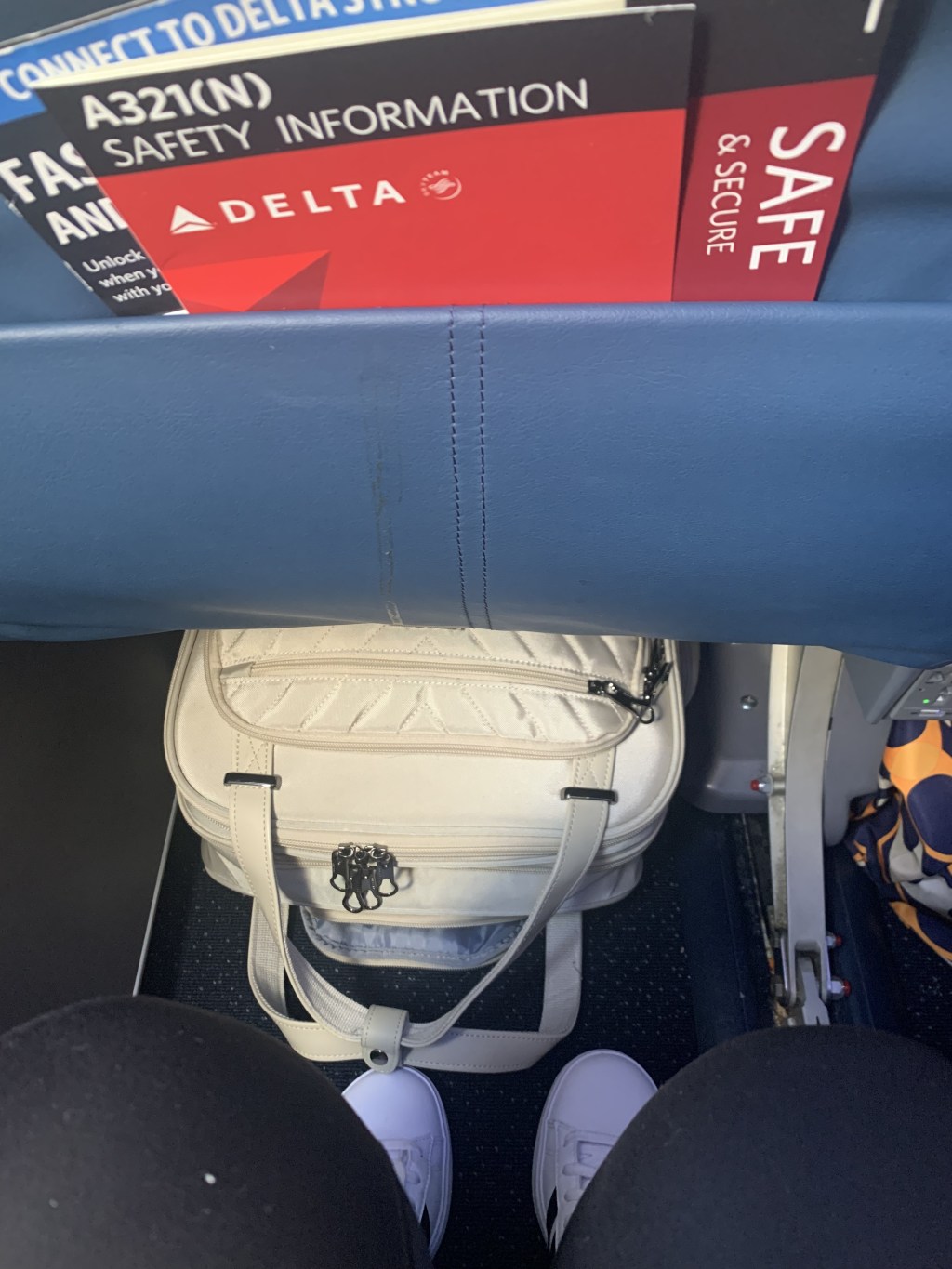
I am a big fan of my little under-seat rolling suitcase, particularly when I’m flying out of Sarasota and have a connecting flight somewhere along the way.
I much prefer wheeling my belongings around the airport rather than lugging a heavy tote bag. Because it opens like a miniature suitcase, I can see where everything is instead of rummaging through one enormous tote – and I like that my laptop is stored in a separate zippered pocket for easy access.
But no matter what kind of carry-on you’re using, I think the secret is to pack with airport security in mind rather than trying to squeeze everything in.
Here’s what works for me.
Keep your liquids together. I put all my travel-sized toiletries in one clear bag, preferably somewhere easy to reach. Even if the airport has scanners that let me leave them in my luggage, I know exactly where they are if they ask me to remove them.
Make your electronics accessible. If you’re traveling with a laptop or tablet, don’t bury it underneath three days’ worth of clothing. Use a separate laptop compartment if your bag has one. Remember that portable chargers and spare lithium batteries generally belong in your carry-on, not your checked suitcase.
Use packing cubes. I absolutely love packing cubes, particularly the compression ones. Besides helping me fit more into a smaller suitcase, they keep everything from becoming one big tangled mess. And if TSA does need to inspect my bag, it’s much easier to deal with a few organized cubes than a suitcase full of loose clothing.
Have a designated place for your passport and ID. This sounds ridiculously obvious, but nothing is quite as jarring as the sudden panic of not being able to find your passport when someone asks to see it. I always recommend using the same secure pocket for your important documents throughout your journey.
Don’t overstuff your bag. I know it’s tempting, especially when you’re trying to avoid paying for checked luggage, but a bag that’s bursting at the seams is difficult to open, close, and organize. Give yourself a little breathing room.
TSA actually recommends packing bags in neat layers and keeping them uncluttered, which helps officers see what’s inside during screening.
What to Do Before You Even Reach the Security Line
This is probably where you can save yourself the most stress.
Rather than waiting until you’re standing in front of the conveyor belt, spend a few minutes getting yourself organized before joining the line.
I like to think of it as giving myself a little head start.
- Have your boarding pass ready on your phone or printed out, if needed, and keep your ID somewhere accessible.
- Empty your pockets of loose change, keys, and other odds and ends. Put them in a secure compartment in your bag.
- Make sure your water bottle is empty.
- Check that your toiletries are properly packed.
- Wear comfortable clothes and avoid excessive metal accessories that could trigger additional screening.
- If you’re traveling with children, explain what will happen before you reach the front of the line.
And here’s another little tip: don’t wear shoes that take forever to get on and off.
Although screening procedures vary and many travelers no longer need to remove their shoes, you could still be asked to do so. I prefer shoes I can slip on and off without sitting on the floor wrestling with laces.
Nobody wants to start their vacation hopping around an airport trying to get a boot back on.
What If You Get Pulled Aside for Extra Screening?
First of all, don’t panic!
Having your bag pulled aside doesn’t automatically mean you’ve done anything wrong.
Sometimes it’s because something in your luggage looks unclear on the scanner, a particular item needs to be examined, or additional screening is required.
I’ve found that the best thing to do is simply remain calm and let the officers do their job.
If you’re asked to open your bag, explain where an item is located if that helps, and follow their instructions.
And if you’re feeling anxious, there’s nothing wrong with saying so.
You can also request a private screening if you need one, and travelers with disabilities or medical conditions can contact TSA Cares ahead of their trip for assistance.
One thing I would avoid is making jokes about weapons, bombs, or anything else that might be taken seriously. Airport security really isn’t the place to test out your comedy routine!!
Is TSA PreCheck Worth It?
If you fly regularly, TSA PreCheck might be worth considering.
It’s a trusted traveler program that allows eligible passengers to use expedited security screening at participating U.S. airports.
In TSA PreCheck lanes, travelers generally don’t need to remove their shoes, belts, light jackets, laptops, or compliant liquids bags, although additional screening can still happen.
For frequent travelers, that can make a real difference, especially with early-morning departures or tight connections.
If you only fly once every couple of years, it might not be worth the expense. But if you go through airports several times a year, it’s worth looking into.
You can find current enrollment options and fees on the official TSA PreCheck website.
My Favorite Trick for Staying Calm? Give Yourself More Time Than You Think You Need
I know some people who seem to regard arriving at the airport fifteen minutes before boarding as some kind of personal achievement – I am absolutely not one of those people!
I would much rather arrive early, get through security without rushing, and then have time to wander around, grab a coffee, find something to eat, or sit and people-watch before my flight.
Particularly when I’m traveling internationally, the last thing I want is to begin a long journey feeling stressed and exhausted.
As a general starting point, plan to arrive at least two hours before a domestic flight and three hours before an international flight, but always check your airline and airport’s recommendations. Busy holiday periods and unusual airport conditions may mean allowing more time. And if you’re flying with children, elderly relatives, or anyone who needs a little extra assistance, I’d give yourself even more time.
There is absolutely nothing wrong with being the person who arrives at the gate early. A Few Things That Are Actually Allowed Through TSA
Before we finish, I thought it would be useful to mention a few things people sometimes assume they can’t bring through security.
| Item | Generally allowed in carry-on? |
| Solid snacks and sandwiches | Yes |
| Empty reusable water bottle | Yes |
| Disposable razors with enclosed blades | Yes |
| Nail clippers | Yes |
| Solid deodorant | Yes |
| Small scissors (blades under 4 inches from pivot) | Yes |
| Prescription medications | Yes, with special screening rules for some forms |
| Knitting needles | Yes |
| Portable phone chargers | Yes, subject to airline/battery restrictions |
| Full-sized liquid shampoo | No, unless a specific exemption applies |
Remember, the TSA officer makes the final decision about whether an item can pass through the checkpoint.
My Final Thoughts on Surviving TSA
At the end of the day, airport security is simply one of those things we have to deal with if we want to travel.
It’s not a particularly calming experience, and I don’t think anyone genuinely looks forward to standing in line, emptying their pockets, and hoping their suitcase doesn’t get pulled aside for inspection.
But it really doesn’t have to be quite as stressful as we sometimes make it.
Pack your bag sensibly, know the basic rules, give yourself plenty of time, and try not to worry too much about the people behind you who appear to have perfected the art of getting through security in thirty seconds flat.
And if you do accidentally leave a full-sized bottle of shampoo in your carry-on?
Well, you’re certainly not the first person to do it, and you won’t be the last.
Just try not to make it the expensive one.
Happy travels!



Leave a Reply