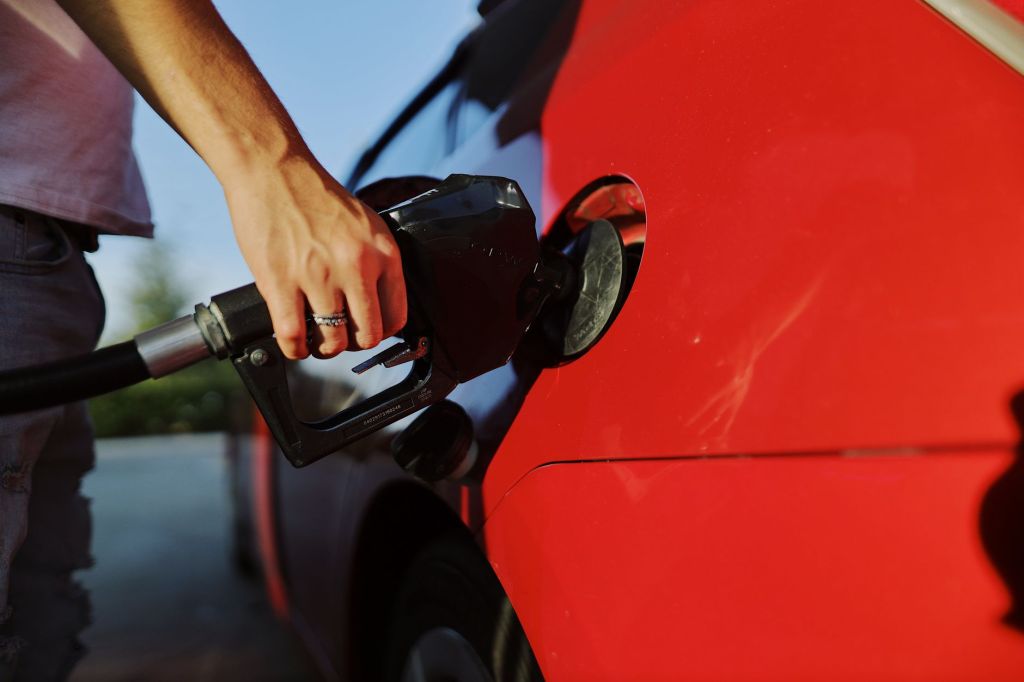
If you’ve filled up your car lately and found yourself staring at the total thinking, Seriously?, you’re definitely not alone!
Gas prices have been creeping, and lately, not-so-creeping, back up again. And for those of us who love a good road trip, that’s not exactly welcome news.
As of September 24, the national average for regular gas is sitting at around $4.48 a gallon, according to AAA. That’s up from about $4.10 just a month ago and a whopping $1.32 more than this time last year.
So yes, unfortunately, you’re not imagining it. Filling up the car really is costing quite a bit more.
And with fall road trips, Thanksgiving travel and Christmas just around the corner, I wanted to know two things: Where can you still find relatively cheap gas in America – and are prices likely to get any better before the holidays?
The 20 Cheapest States for Gas Right Now
First, a little perspective. “Cheap” is definitely a relative term at the moment. Only three states currently have an average below $4 a gallon.
Still, there’s a pretty big difference depending on where you’re driving.
Based on AAA’s statewide averages for regular gasoline on September 24, 2026, these are the 20 least expensive states:
- Texas — $3.96
- Indiana — $3.96
- Mississippi — $4.00
- Louisiana — $4.03
- South Carolina — $4.05
- Tennessee — $4.06
- Arkansas — $4.06
- Alabama — $4.09
- Georgia — $4.11
- Oklahoma — $4.12
- North Carolina — $4.13
- Kentucky — $4.16
- Kansas — $4.17
- Missouri — $4.18
- Virginia — $4.24
- North Dakota — $4.26
- Colorado — $4.31
- South Dakota — $4.32
- Iowa — $4.33
- Maryland — $4.33
*Prices are AAA statewide averages for regular gasoline as of September 24, 2026 and will, of course, change.
One thing that immediately jumps out at me is just how many of the cheaper states are in the South and Southeast. Texas currently has the lowest statewide average at just under $3.96.
And then there’s California! The statewide average is currently about $6.24 a gallon. So if you’re planning a big California road trip this fall, fuel is definitely something you’re going to want to add to the vacation budget.
Why Has Gas Gotten So Expensive Again?
Normally, this is actually the time of year when we start getting a little relief at the pump.
Summer driving season ends, demand generally eases and gas stations begin switching over to less-expensive winter-blend gasoline.
But, as we are all witnessing, this year isn’t behaving normally.
AAA says the national average has continued climbing into September, reaching its highest level ever for this time of year. Crude oil prices and continuing disruption and uncertainty surrounding oil shipments from the Middle East have been putting pressure on prices.
In other words, the usual seasonal drop hasn’t really materialized yet. And that’s frustrating because we’re heading straight into another big travel period.
So What Will Gas Cost by Thanksgiving and Christmas?
This is where things get a little complicated.
There is some reason to believe prices could ease as we move toward the end of the year, but I certainly wouldn’t plan a holiday road trip assuming we’re suddenly going back to $3 gas.
The U.S. Energy Information Administration’s September forecast expects Brent crude oil to average around $90 a barrel during the second half of 2026. The EIA expects Middle Eastern oil production and exports to gradually improve, but it also expects some export constraints to continue through the end of the year.
That means we could see some relief, but there is still a lot of uncertainty.
Earlier in September, futures markets were pointing toward the possibility of gasoline dropping by roughly 35 cents by November. That would certainly help. But events have moved quickly since then, and AAA reported on September 24 that prices were still rising rather than falling.
So for Thanksgiving and Christmas travelers, I’d describe the outlook as hopefully lower, but still expensive – and potentially volatile.
If crude oil prices fall and supply improves, we could finally start seeing some of the normal autumn price decline. If geopolitical disruptions get worse, however, that could very quickly push prices in the opposite direction.
For now, I’d budget fairly conservatively for holiday road trips rather than counting on a big drop.
How to Travel Smarter When Gas Is Expensive
I’m definitely not giving up road trips because gas costs more. But I am paying more attention to how much getting there is actually going to cost.
There are a few easy ways to make a difference.
Don’t automatically fill up at the first station you see. Prices can vary quite a bit even within the same town. Check a gas-price app before you stop, particularly when you’re traveling on the interstate. Sometimes driving a mile or two away from the highway can save you considerably more than filling up at the station right beside the exit.
Don’t wait until you’re running on fumes. I’m guilty of this one. Once that little gas light comes on, you’re probably going to stop wherever you can rather than wherever the gas is cheapest. On a road trip, I try to start looking when I’m somewhere around a quarter of a tank.
Check your route before you leave. If you’re driving through several states, look at average gas prices along the way. If gas is noticeably cheaper in one state, it makes sense to fill up there rather than 30 miles down the road after you’ve crossed the state line.
Use the rewards programs you’re already paying for. Grocery-store fuel points, warehouse clubs, credit-card rewards and gas-station loyalty programs can all knock a little off the price. Five or ten cents a gallon might not sound terribly exciting, but over a long road trip with several fill-ups, I’ll take it.
Lighten the load. I’m not suggesting you start removing seats from the car in the name of fuel economy, but there’s no point driving around with a trunk full of stuff you don’t need. Extra weight can reduce fuel efficiency.
Check your tires before a long drive. Properly inflated tires aren’t just a safety issue. They can also help your car run more efficiently. I try to make checking tire pressure part of my pre-road-trip routine anyway.
Combine stops when you can. Instead of driving across town for breakfast, backtracking for gas and then getting onto the interstate, plan your stops together. It sounds ridiculously simple, but all those little unnecessary miles add up.
Compare driving with flying. This one is especially important right now. We tend to assume that driving is automatically the cheaper option for a family trip. At $4-plus a gallon, that’s not always true anymore.
Before committing to a really long drive, do the math.
If it’s 1,000 miles each way and your car gets 25 miles per gallon, that’s about 80 gallons of gas for the round trip. At $4.50 a gallon, you’re looking at roughly $360 in fuel alone – before hotels, meals, tolls and parking.
Depending on how many people are traveling, flying might suddenly be more competitive than you expected.
One Last Thing…
I’m a big believer that higher travel costs don’t necessarily mean we have to stop traveling. Sometimes it just means we have to change the way we do it.
That could be as simple as choosing somewhere three hours away instead of ten. Maybe you take one longer road trip rather than several shorter ones. Or perhaps you find a great little town close to home that you’ve driven past a hundred times but never actually stopped to explore.
And if you’re traveling over Thanksgiving or Christmas this year, I’d definitely build a little extra room into the gas budget.
Hopefully, we’ll see some relief at the pump as we move deeper into fall and winter. But with prices sitting around $4.48 nationally right now, I’m not counting on bargain gas anytime soon.
And I’m definitely checking the price before I pull off the interstate! What are your tips for dealing with rising gas prices? And is that altering the way you’re going to travel this holiday season?








Leave a comment